Prohibited, Revealing, Irreplaceable: Frederick Wiseman Has Passed Away, Five of His Iconic Documentaries
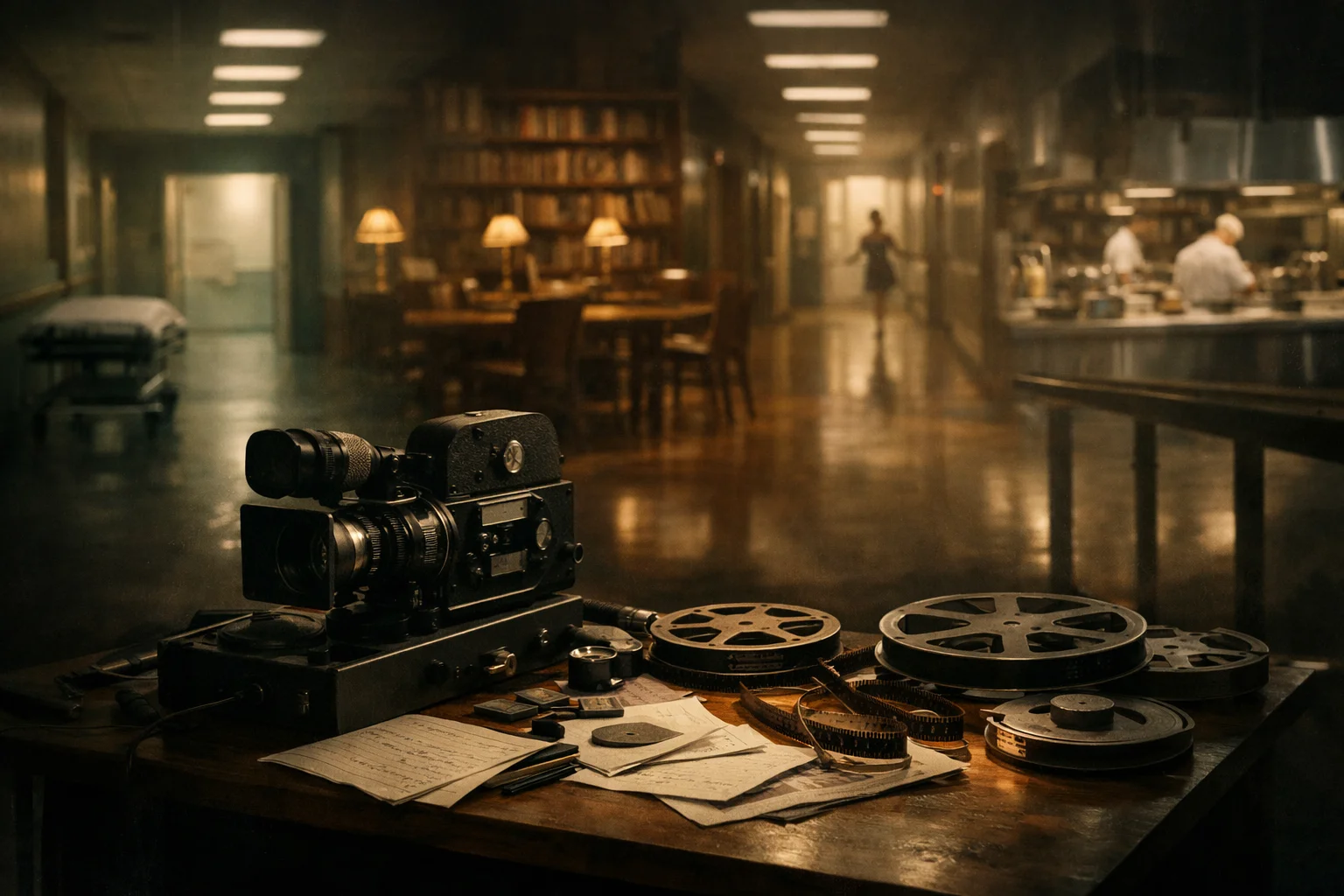
A farewell to Frederick Wiseman, the visionary who redefined the documentary as a form of \"visual fiction\" and made truth a painful art
With a career spanning nearly six decades and encompassing 45 films, the iconic documentary filmmaker Frederick Wiseman has died at the age of 96, marking the loss of one of the most important and original creators in the history of cinema. He passed away on February 16, 2026, at his home in Cambridge, Massachusetts, a city he shared his life, along with Northport, Maine, and Paris, France.
The news was confirmed in a joint statement from his family and his production company, Zipporah Films, the distribution company he founded in 1971 and named after his wife of 65 years, Zipporah Batshaw Wiseman, who preceded him in death in 2021. The statement read, in part, that his films "are celebrated for their complexity, narrative power, and humanist gaze." His passing has spread deep sadness among those who recognized him as the ultimate observer and anatomist of American and French society. As The Guardian put it, Wiseman's films are monuments to human suffering, human challenge, and human potential.
An anatomist of institutions, Wiseman devoted his life to understanding how people coexist, work, and survive within organized structures. His subjects ranged from the sublime to the bureaucratic, from the intimate to the monumental: psychiatric hospitals, high schools, dance troupes, monasteries, public housing projects, welfare offices, modeling agencies, boxing gyms, zoos, military bases, legislatures, and three-Michelin-star restaurants. Together, they formed a vast, unparalleled mosaic of contemporary life on both sides of the Atlantic.
A Method of Radical Restraint
Although Wiseman was often classified as part of the "direct cinema" or "cinéma vérité" movement, he bristled at these labels, once dismissing the latter as "a pompous French term, which you can't take seriously." He preferred instead to describe his works as "visual novels," insisting that documentaries could be "as complex and subtle as a good novel."
His method was ascetic and utterly consistent across nearly five decades of filmmaking: he never conducted interviews, never used a narrator, never employed title cards or onscreen captions, and avoided any music that did not originate from the filming location itself. There was nothing to guide the viewer's emotions, only the reality of what his camera captured and the intelligence of his editing.
"Ignorance is the best starting point for a film," he used to say. "I don't do any research before I start." In his 2016 Academy Award acceptance speech, he put it with characteristic humor: "I usually know nothing about the subject before I start. And I know there are those that feel I know nothing about it when it's finished!"
For Wiseman, the camera was a tool of constant discovery, and the editing process, which could take up to ten months of solitary, painstaking work, was where hundreds of hours of unedited footage were transformed into a coherent narrative with depth and rhythm. He would construct every sequence individually first before determining where it fit in the larger picture, a method that gave even his longest works, some stretching to four, five, or nearly six hours, a propulsive quality that rarely dragged. For this great creator of truth, "editing is the moment when reality becomes poetry."
His physical commitment was legendary. Well into his 90s, Wiseman carried a boom microphone alongside his camera operator during 12- to 14-hour filming days. His goal, as he once told the New York Times, was "to do a natural history of the way we live."
From Law to the Banned Premiere
Born in Boston on New Year's Day, 1930, to a Jewish family, Wiseman was the son of Jacob Leo Wiseman, a prominent attorney who helped Jews escape European nations engulfed by Nazism, and Gertrude Leah Kotzen, an administrator at a children's psychiatric ward and an aspiring actress who entertained her son with stories and imitations. Both parents left a visible imprint on his life's work: his father's engagement with justice and institutions and his mother's love of performance and narrative.
Wiseman earned his Bachelor of Arts from Williams College in 1951 and a law degree from Yale Law School in 1954. He was then drafted into the U.S. Army, serving from 1954 to 1956 during the Korean War. After his service, he spent two formative years living in Paris before returning to the United States, where he took a position teaching law at Boston University's Institute of Law and Medicine.
It was there, at BU, that the seeds of his filmmaking career were planted. Wiseman regularly took his law students on field trips to the nearby Bridgewater State Hospital for the Criminally Insane, hoping to show future judges and prosecutors the kind of place they might one day send people. "I reached the witching age of 30 and figured I better do something I liked," he later recalled. He was also aided by a technological revolution: the recent development of synchronous sound recording had opened up vast new possibilities for on-location documentary work.
His first step into cinema was as a producer, not a director. He read Warren Miller's novel The Cool World, about African-American youth in a Harlem street gang, acquired the rights, and served as producer on the low-budget 1964 adaptation directed by Shirley Clarke. The experience gave him confidence that he could handle a film himself. (The Cool World would later be selected for preservation in the United States National Film Registry.)
The result of that confidence was 1967's Titicut Follies, a documentary so raw and revealing about the inhumane confinement of patients at Bridgewater that it shook the foundations of American society. Shot over 29 days and drawing on 40 hours of footage, the film documented inmates kept naked in barren cells, bullied and mocked by guards, and subjected to force-feedings and strip searches, all captured without narration, without commentary, without mercy. Perhaps the most famous sequence, one Wiseman later came to regret, calling it heavy-handed, intercut the brutal force-feeding of an inmate with images of the same man's corpse being tenderly prepared for burial.
Before the film could even be screened at the 1967 New York Film Festival, the Massachusetts government sought an injunction to block its release, arguing that the film violated the inmates' privacy and dignity. A New York court denied the plea, and the film premiered to widespread critical acclaim. But in 1968, Massachusetts Superior Court judge Harry Kalus ordered all copies to be recalled and destroyed, ruling that the film was "a nightmare of ghoulish obscenities." Titicut Follies became the first American film to be banned for reasons other than obscenity or national security, a distinction that made it a cause célèbre for free-speech advocates and cinephiles alike.
On appeal, the Massachusetts Supreme Judicial Court allowed the film to be shown only to restricted audiences: doctors, lawyers, social workers, educators, and mental health professionals. Ironically, Wiseman later noted, Bridgewater itself screened the film annually for its staff, as a training film in what not to do. The ban held for more than two decades. In 1987, after five Bridgewater inmates died by suicide in incidents that advocates argued could have been prevented with better care, Wiseman saw an opening and pressed his appeal. In 1991, Superior Court Judge Andrew Meyer finally lifted all restrictions, ruling that First Amendment concerns outweighed privacy issues, particularly since most of the patients depicted in the film had died. Titicut Follies aired on PBS for the first time on September 4, 1992, a quarter-century after it was made.
The film's impact extended far beyond its own distribution. It inspired a 1968 study that found 30 inmates had been committed illegally. It contributed to the eventual closing or reform of major state mental institutions across the country. And it deeply influenced popular culture: the cast of Miloš Forman's One Flew Over the Cuckoo's Nest (1975) watched Titicut Follies to prepare for their roles. In 2022, the Library of Congress selected it for preservation in the National Film Registry as culturally, historically, and aesthetically significant.
This first directorial attempt set Wiseman's course for life, proving that the truth can be extremely uncomfortable for those in power and that an unflinching camera is one of democracy's most essential tools.
A Revealing Odyssey in Five Rhapsodies
Wiseman's body of work is staggering in both volume and range: 45 films produced and directed under the Zipporah Films banner, almost one per year, each probing a different facet of how institutions shape, and often fail, the people they are meant to serve. From Welfare, which examined the New York welfare system, to Ex Libris, about the city's public library, and the recent Menus-Plaisirs – Les Troisgros, about a three-Michelin-star restaurant in France, Wiseman never stopped learning.
His honors were considerable: an honorary Academy Award in 2016, a Golden Lion for Lifetime Achievement at the Venice Film Festival in 2014, a Peabody Award in 1991, Emmy wins for Hospital and Law and Order, and both Guggenheim and MacArthur Fellowships. A 2025 retrospective at Film at Lincoln Center spoke to the full breadth of his vision.
Beyond the documentary form, Wiseman was also a theater director of note, staging plays by Samuel Beckett, Luigi Pirandello, and William Luce in both America and France. He adapted his film Welfare into an opera, with a libretto by David Slavitt and music by Lenny Pickett. A ballet version of Titicut Follies was staged in New York in 2017. And in his final years, he ventured into acting, appearing in Rebecca Zlotowski's Other People's Children (2022), A Private Life (2025), and providing the offscreen voice of a radio announcer in Carson Lund's baseball comedy Eephus (2025).
In 2025, Wiseman announced his retirement, telling interviewers that he no longer had the energy for a new production. He also oversaw digital restorations of his work, signing a deal with the library-led streaming service Kanopy to make his films available to a wider audience than ever before. Four of his films, Titicut Follies, Hospital, High School, and The Cool World, are preserved in the Library of Congress's National Film Registry.
In his 2016 honorary Oscar acceptance speech, he summed up his career with a wit that belied its scale: "I've been involved in a 50-year course in adult education, where I'm the alleged adult who studies a new subject every year."
The power of Frederick Wiseman's penetrating gaze is immeasurable. In the following tribute, we analyze the five most defining moments of his career, where reality met high narrative.
1. Titicut Follies (1967) — The Film That Was Too True
In 1967, the premiere of Titicut Follies shook the foundations of American society. Shot over 29 days at the Bridgewater State Hospital for the Criminally Insane in Massachusetts, the film brutally documented the living conditions of patients who were kept in barren cells, infrequently bathed, force-fed through nasal tubes, and subjected to relentless mockery and degradation by staff.
Wiseman presented the complete breakdown of human dignity, with scenes so shocking that the Massachusetts Superior Court banned the film from public viewing for over two decades, making it the first American film banned for reasons other than obscenity or national security. When critic Roger Ebert called it one of the most despairing documentaries he had ever seen, he was not exaggerating.
It was the first time a director had dared to show the face of institutional violence without a trace of censorship or embellishment, and it cost him dearly. Yet the film proved prophetic: it contributed to nationwide reforms in the treatment of the institutionalized mentally ill, inspired legal challenges against illegal commitments, and influenced a generation of filmmakers who believed the camera could be an instrument of justice.
2. Welfare (1975) — The Machinery of Despair
In Welfare, Wiseman turns his lens on New York's labyrinthine welfare system. Through endless queues, exhausting confrontations between overworked officials and desperate citizens, and the grinding repetition of bureaucratic processes, the film reveals the tragedy of poverty and the state's inability to manage, let alone alleviate, human despair.
There is no music, no explanations, and no narrator to guide the viewer's sympathies, only the truth of a society struggling with its own inner workings. What emerges is a portrait of Sisyphean futility: people trapped in a system ostensibly designed to help them, yet one which ensnares them in cycles of paperwork, humiliation, and delay. The film later inspired an opera adaptation, with a libretto by David Slavitt and music by Lenny Pickett, proving that Wiseman's vision of institutional dysfunction could translate across artistic forms.
To this day, Welfare remains the ultimate lesson in how the daily routine of an office can be transformed into compelling, devastating cinema.
3. La Danse (2009) — The Invisible Architecture of Perfection
With La Danse in 2009, Wiseman moves to Paris to observe the preparations of the Paris Opera Ballet. Here, the subject matter changes dramatically, from the bleak machinery of poverty to the exquisite pursuit of beauty, but the method remains the same.
Wiseman focuses not only on the breathtaking grace of the performances but, above all, on the exhausting physical effort, the rigid discipline, and the layered hierarchies required to achieve artistic perfection. Rehearsals are dissected with surgical precision: tendons strain, tempers flare, choreographers demand more, and dancers push their bodies past the limits of endurance.
His camera becomes the invisible observer of creation, proving that an artistic organization is just as complex and rigorous as any public institution and just as revealing of human nature. La Danse sits alongside his earlier Ballet (1995), about the American Ballet Theatre, and Crazy Horse (2011), about the famed Parisian cabaret, as part of a trilogy exploring performance, discipline, and the hidden labor behind spectacle.
4. Ex Libris: The New York Public Library (2017) — Democracy's Living Room
The 2017 film Ex Libris is a tribute to the New York Public Library and won Wiseman the Critics' Choice Documentary Award for Best Director. At a time when information is taken for granted and public institutions are under siege, Wiseman records the library not simply as a repository of books but as a living core of democracy and social integration.
From lectures by leading intellectuals to computer literacy classes for seniors; from job search workshops to outreach programs for immigrants; from children's story hours to debates about digital access, the film reveals the library as perhaps the last truly egalitarian public space. Every stratum of New York society passes through its doors, and Wiseman captures them all with equal attention and respect.
This film is the director's eloquent response to the crisis of public institutions, highlighting the power of community, free access to knowledge, and the quiet heroism of those who maintain the spaces where democracy lives and breathes.
5. Menus-Plaisirs – Les Troisgros (2023), A Final Meditation on Excellence
In his last major work, Menus-Plaisirs – Les Troisgros (2023), Wiseman enters the inner sanctum of La Maison Troisgros, a three-Michelin-star restaurant in France's Loire region, operated by the same family across three generations.
With his characteristic patience, he observes the full arc of creation: from the origin of ingredients in the earth and at the market to the meticulous preparation in the kitchen to the ritual of plating and serving. Each gesture carries the weight of tradition; each dish reflects decades of accumulated knowledge passed from parent to child.
The film, like all his others, is a study of excellence, tradition, and the quiet persistence of human ingenuity. It is also, unmistakably, a farewell, a final contemplation of what it means to devote a life to craft, whether that craft involves composing a perfect sauce or composing a perfect film. Wiseman, who turned 93 during its release, closed the circle of a career defined by curiosity, rigor, and an unshakable faith that watching people do what they do, really watching, without interference or judgment, is one of the highest forms of art.
Legacy
Frederick Wiseman is survived by his two sons, David and Eric, three grandchildren, and Karen Konicek, his collaborator and friend of 45 years. His influence on documentary filmmaking is incalculable. Filmmakers inspired by his work include Alice Diop, who credited Wiseman as the reason she became a filmmaker; Errol Morris, who considered him a mentor and friend; Ryusuke Hamaguchi, who incorporated elements of Wiseman's approach into his own celebrated narratives; and Lance Oppenheim, among countless others.
In 1969, the critic Pauline Kael called Wiseman "probably the most sophisticated intelligence to enter the documentary field in years." More than half a century later, that assessment has only deepened. Penn State professors Thomas W. Benson and Carolyn Anderson called him one of the "most original, consequential, and productive documentary filmmakers of the past century."
His body of work, austere, immersive, and profoundly humane, endures as both a historical record and a moral accounting of how we live. As Wiseman himself once said: "I've been involved in a 50-year course in adult education, where I'm the alleged adult who studies a new subject every year." The course is now complete. The lessons will last forever.