Ali Khamenei: The Ayatollah of "Resistance" and Repression, His Life and 37 Years of Absolute Power
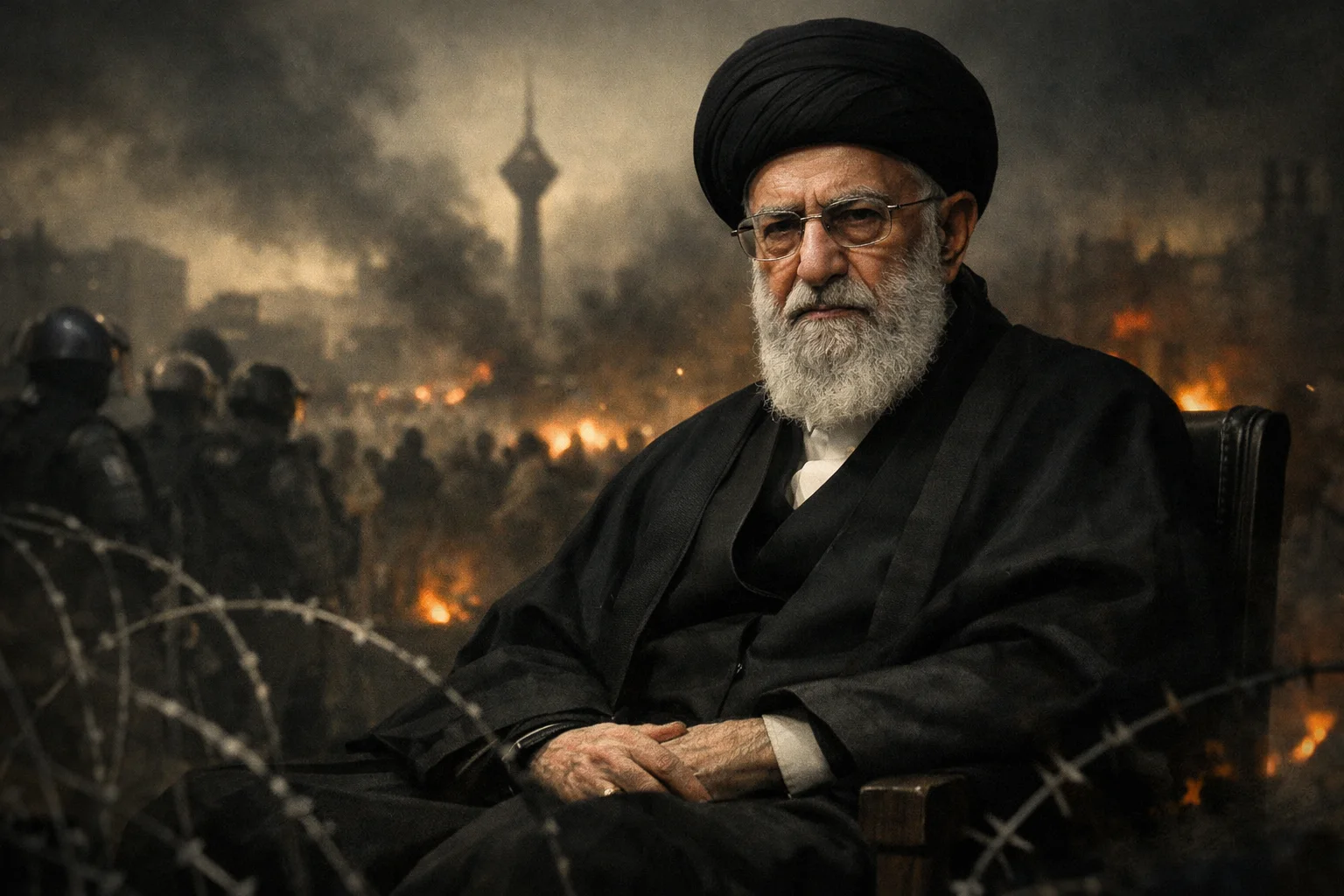
How a leader-symbol of authoritarianism sealed Iran with blood, sanctions, and isolation
Ali Khamenei was more than just Iran's Supreme Leader. He was the face of a theocracy that used repression to rule, isolation as a strategy, and the Guardians of the Revolution to stay in power. For almost 40 years, he ran a system that crushed dissent at home while projecting defiance abroad. In its last chapter, the system turned on its own people with unprecedented violence.
In 1989, Ali Hosseini Khamenei became the leader of the Islamic Republic. This was the day the system had to show that it could live without its founder, Ayatollah Ruhollah Khomeini. When senior clerics suggested him as a successor, he said he was "not suitable." History says he was the longest-serving leader in modern Iranian history and one of the strongest but also most tyrannical leaders in the Middle East. He outlasted every American president from George H.W. Bush to the first term of Donald Trump.
His death on February 28, 2026, when a joint American-Israeli airstrike hit his home in Tehran, ended a 37-year period in which the Islamic Republic became more distrustful of the West, more reliant on the Revolutionary Guards to keep "stability" at home, and more willing to sacrifice its own people to keep the regime in power. He was 86 years old. At first, Iranian state media denied the reports. The government's foreign ministry spokesperson said that Khamenei was "safe and sound." Iranian state television didn't confirm what Washington and Tel Aviv had already said until the next day, March 1: the Supreme Leader was dead. There was a 40-day period of mourning. His body was to be buried in Mashhad, the city where he was born and is now a holy site.
His Background and "Political Awakening"
Khamenei was born on April 19, 1939, in Mashhad, which is one of the holiest cities in Shiite Islam and home to the Imam Reza Shrine, which millions of pilgrims visit every year. He grew up in a family of clerics with a lot of respect but not a lot of money. Sayyid Javad Khamenei, an Islamic scholar of Azerbaijani Turkish descent whose own father was born in Najaf, Iraq, and his second wife, Khadijeh Mirdamadi, an ethnic Persian from Yazd, had eight children. He was the second son and sixth child. Two of his brothers also became clerics. His younger brother Hadi became a newspaper editor and cleric who sometimes disagreed with the regime's strict rules.
Khamenei himself said that he had a "modest" childhood in a working-class area. He said that the family lived in a house that was about sixty-five square meters, with just one room and a dark basement. This information is in his official biography. He remembered, "Sometimes for dinner we only had bread with some raisins that our mother had somehow made up." When people came to talk to his father about religion, the family would go to the basement. Poverty became a part of his own story, and later it became a big part of his political speeches about "self-sufficiency" and "resistance economy." As leader, he would tell this story over and over again, using his humble beginnings as proof that he was with the poor, even as the Revolutionary Guards built a multibillion-dollar business empire under his watch.
When he was four years old, he and his older brother Mohammad were sent to a maktab, which is a traditional Quranic primary school. He went to seminary in Mashhad when he was still a boy. Mehdi Khalaji of the Washington Institute says that he started wearing clerical clothing when he was eleven, which made his peers laugh. He finished the intermediate seminary curriculum, which included logic, philosophy, and Islamic law, at the Soleiman Khan and Nawwab religious schools. His official biography says he did this in the "exceptionally short time" of five years, with the help of his father and well-known scholars.
He went to the Shiite seminary in Najaf, Iraq, in 1957, when he was 18 years old. Najaf is historically the holiest city in Shia Islam and a rival center of learning to Qom. But his father didn't want him to stay, so he called him back within a year. He moved to Qom in 1958 and went to classes with Grand Ayatollah Hossein Borujerdi and, most importantly, Ruhollah Khomeini, whose fiery opposition to the monarchy was gaining popularity among young seminarians. Khamenei's political identity began to take shape in Qom. He also studied with Hossein-Ali Montazeri, a professor who, decades later, would be put under house arrest by his former student after publicly criticizing the regime's human rights abuses.
Khamenei was involved in the anti-monarchy movement when he was young, and he became very anti-Western because of the events of the time and the strong memory of the 1953 CIA-MI6 coup that overthrew the democratically elected Prime Minister Mohammad Mossadegh and put the Shah back in charge. He also spent a lot of time with secular intellectuals and the Movement of God-Worshipping Socialists in Mashhad. This group supports Islamic socialism based on the ideas of Karl Marx, Che Guevara, and the Iranian intellectual Ali Shariati. Abbas Milani's analysis posits that this exposure influenced Khamenei's subsequent Third Worldist inclinations, his inherent distrust of Western-aligned liberalism, and his belief that imperialism was the fundamental cause of Iran's afflictions.
He also worked on building an image of a "modern" cleric by reading international authors, keeping up with culture, and translating texts from Arabic to Persian, such as Sayyid Qutb's The Future in Islamic Lands and works on Muslim liberation movements. His love of poetry was a well-known part of his public persona for the rest of his life. He often quoted poems in speeches and held events where pro-government poets read their work and he gave his thoughts on it. He also wrote more than a dozen books about Islamic thought, prayer, and politics. His critics would later compare these intellectual interests to the strict rules he set for Iranian society, such as censorship, the morality police, and the imprisonment of artists and writers.
Persecution Before the Revolution and Access to the Heart of Power
Khamenei's political activism put him in trouble with the Shah's security forces many times. Ayatollah Milani in Mashhad hired the young cleric in 1962 to report on public opinion to Khomeini in Qom. This was a dangerous job that put him on SAVAK's radar. In June 1963, just three days before Khomeini was arrested during the uprising against the Shah's "White Revolution" reforms, Khamenei was arrested by state police in the city of Birjand while he was trying to spread the word. He was sent to Mashhad and spent ten days in jail there. It was the first of six people who were arrested.
His actions against the government didn't stop for the next few years. He was arrested many times, and according to his official biography, SAVAK, the Shah's secret police, tortured him. In the end, the government sent him to the far-off cities of Jiroft and Iranshahr in southeastern Iran, where he stayed until July 1978, just a few months before the revolution. His years of persecution made him more of a revolutionary and strengthened the worldview that would guide him for decades: the belief that Iran was always under attack by foreign enemies and their agents in Iran, and that only strict ideological discipline could keep the Islamic state safe.
On January 12, 1979, a month before the revolution's victory, Khomeini named Khamenei to the Revolutionary Council. He was joined by Akbar Hashemi Rafsanjani, Mohammad Beheshti, and other people who helped build the new order. When the Shah fell, Khamenei became a key figure in the new government. He worked for the state, served as deputy defense minister under Mehdi Chamran, briefly led the Revolutionary Guards, and was elected to parliament from a Tehran district. One of the most important things Khomeini did was make him Tehran's Friday Prayer Imam. This was a very important position that he held for decades, giving sermons almost 250 times.
During the Iran-Iraq War (1980–1988), which Iran called the "Sacred Defense," Khamenei often wore a military uniform, went to the front lines, and made people believe that an outside "enemy" was always threatening the country and supporting its enemies. The war, which started when Saddam Hussein invaded Iran and killed about a million people in both countries, became a crucible that shaped Iran's national identity and Khamenei's political beliefs. He was the head of the Supreme Council of War Support, which was in charge of mobilizing troops and getting supplies for a war that drained the country's resources and left a generation scarred.
In June 1981, he survived an attempt on his life that became a key event in his personal mythology. A bomb hidden in a tape recorder on the podium went off while someone was giving a speech at the Abu Zar Mosque in Tehran. The device was on his left, close to his heart. A bodyguard had moved it to the right side just before the explosion. The Forqan Group is said to have carried out the attack, which left Khamenei with serious injuries and permanently paralyzed his right hand. This injury was a visible sign of his revolutionary sacrifice for the rest of his life. On March 15, 1985, a second assassination attempt happened when a bomb planted by the Mojahedin-e Khalq (MEK) went off during Friday prayers that he was leading at Tehran University. Khamenei himself was not hurt, but about 14 people died and 84 were hurt. He kept preaching and didn't leave the stage.
In 1981, the same year he was elected president, he got 95% of the vote. He stayed in office until 1989, when the previous president, Mohammad Ali Rajai, was killed in a bomb attack. His election to the presidency solidified his political standing, yet he was not regarded as the "first" among the clergy, nor did he possess the theological authority of Khomeini. He was a political operator, not a great legal expert, and this difference would make his legitimacy questionable throughout his time as Supreme Leader.
"The Succession That Should Have Happened" in 1989"Yesterday"
The regime had to act quickly after Khomeini died on June 3, 1989. The Islamic Republic had to show that the velayat-e faqih, which is the Guardianship of the Islamic Jurist, could last longer than the man who came up with it in order to stay in power. The Assembly of Experts, which is made up of 88 clerics who are required by law to choose the Supreme Leader, was asked to choose a new leader. They picked Khamenei in a quick process that was said to be finished in less than a day and was meant to keep the state going.
It wasn't clear what to do. Grand Ayatollah Hossein-Ali Montazeri was Khomeini's chosen successor. He held the title of Vice Supreme Leader from 1985 to 1989, which is no longer used. But Montazeri had been pushed to the side after publicly criticizing the mass execution of political prisoners in 1988, which was one of the worst times in the Islamic Republic's history when thousands of dissidents were killed on Khomeini's orders. The establishment turned to Khamenei after Montazeri left. Khamenei was a loyal insider, a two-term president, and a man who had been arrested, bombed, and exiled for the revolution. However, he did not have the highest rank of Shiite religious scholarship, the title of marja-e taqlid (source of emulation). The constitution was changed soon after Khomeini's death to fill this gap. It made the Supreme Leader's theological qualifications less strict.
The picture of the "reluctant" successor didn't last long. Khamenei built a strong system of personal power in the years that followed. He didn't have Khomeini's charm or natural base of clerical authority, so he built personal networks, first in the military and then among loyal clerics. At the same time, he took direct control of the major bonyads (religious foundations) and the seminaries in Qom and Mashhad. Saeid Golkar, an analyst, and Mehdi Khalaji, a former cleric, say that Khamenei made a "parallel structure" for each of the country's institutions, such as the army, intelligence agencies, judiciary, and media. This duplicated centers of power and kept them weak enough so that no one rival could challenge him, while he remained the only person who could make decisions.
He was in charge of the police, the military, the courts, state broadcasting, the Guardian Council (which checked out all candidates for elected office), the Expediency Discernment Council, and even the limits of political competition. Presidents who were elected came and went. The Supreme Leader still had real power.
The "State of the Guards" and "Security" as a Way of Thinking
The most important thing Khamenei did as leader for decades was to turn the Islamic Revolutionary Guard Corps (IRGC) from a revolutionary militia into the most powerful organization in Iran, in terms of military, political, and economic power. Khamenei called them the "shield" of the system. The result changed Iran from top to bottom.
The IRGC became an economic empire during the 1990s, when President Rafsanjani's administration used Article 147 of the constitution to allow the Guards to get involved in business. The Khatam al-Anbiya Construction Headquarters, which is part of the IRGC's engineering branch, got big contracts for building infrastructure with Khamenei's blessing. What began as rebuilding after the war grew into a huge, unclear business. The IRGC was getting billions of dollars in no-bid contracts for oil, gas, petrochemicals, construction, telecommunications, and banking during Ahmadinejad's presidency (2005–2013). The biggest deal ever on the Tehran Stock Exchange happened in 2009, when a group of companies linked to the IRGC bought 51 percent of the Telecommunication Company of Iran for $7.8 billion.
The IRGC's economic reach became huge. By 2013, the Clingendael Institute thought that foundations and businesses linked to the IRGC and the military made up more than half of Iran's GDP. The Los Angeles Times said that the IRGC had business ties with more than 100 companies that made more than $12 billion a year. The network included oil and gas development, car manufacturing, shipping, real estate, farming, banking, and even clinics that do laser eye surgery. The Iranian government set aside more than half of the country's oil and gas export revenues—about €12 billion—for the IRGC and law enforcement in the 2025 budget.
According to a 2024 report by the defense intelligence firm Janes, the IRGC controlled Iran's borders and had a monopoly on smuggling alcohol, drugs, weapons, and tobacco, costing the private sector billions of dollars every year. To get around international sanctions, the Guards also used cryptocurrency and secret oil shipments. This created a shadow financial system that worked alongside the official economy.
The effects on society were terrible. As IRGC-affiliated companies systematically pushed traditional business elites and private contractors out of the way, resentment grew among them. These companies had access to conscript labor, military equipment, and state funds. Iran's industrial output, which was over 25% of GDP in the early 2000s, fell sharply as corruption, exclusion, and the loss of private businesses hurt the economy. At the same time, IRGC commanders and their families lived in neighborhoods that one former intelligence officer said looked like "a carbon copy of Beverly Hills," with their own schools, markets, resorts, and hospitals. Some members of parliament made more than $59,000 a month, while regular state workers made as little as $200 a month.
The Guards became the main tool for spying and repression in the country. The Basij, a volunteer paramilitary group that worked for the IRGC, kept an eye on neighborhoods, universities, and workplaces for the regime. The Quds Force, the IRGC's external operations arm, was led by the legendary and feared commander Qasem Soleimani (who was killed by a US drone strike in January 2020). It showed Iranian power through a network of allied militias in Lebanon, Syria, Iraq, the Palestinian territories, and Yemen.
As the system became more "militarized," the traditional pillars of Iranian civil society, like the bazaar merchant class, the independent clergy, the universities, and the professional associations, lost power over time. Khamenei's Islamic Republic was no longer mostly a theocracy. It was a police state in clerical robes.
The "Axis of Resistance": A Plan for the Region
Many experts, and even some critics in Iran, said that Khamenei's foreign policy was based on a deep-seated hatred of the US and Israel. This was what they called the "core identity" of the regime. This was not just talk; it was a guiding principle that determined military doctrine, alliances, and how national resources were used.
Instead of directly facing off against the much stronger American and Israeli military forces, Khamenei built up "strategic depth" by working with a network of regional proxies and allies. These included Hezbollah in Lebanon, the Assad regime in Syria, Shiite militias in Iraq, Hamas and Islamic Jihad in the Palestinian territories, and the Houthi movement in Yemen. It was thought that the Islamic Republic's average annual budget for these proxies was around $1.6 billion. Syrian opposition sources say that Iran spent about $50 billion supporting the Assad regime from 2011 until it finally fell apart. This was a huge investment that turned out to be a strategic failure.
The idea behind this network was to scare people off: if Iran were attacked, the war would spread to many fronts, making any attack on Tehran too expensive to be worth it. The plan really worked. Hezbollah had more than 150,000 rockets and missiles aimed at Israel. The Houthis showed that they could stop shipping through the Strait of Hormuz, which is where about 20% of the world's oil passes. Militias in Iraq that were backed by Iran were always a threat to American troops and interests in the area.
But this plan came with huge costs. It started a cycle of conflict that sped up sanctions, made Iran's diplomatic isolation worse, and used up resources that could have been used to help the country's economy, which was getting worse. It also "locked in" Tehran's image as a destabilizing force, which made it harder for diplomats to work with them, even when people in the Iranian government wanted to make peace. And it led to the strikes that killed Khamenei himself, as decades of proxy wars and regional instability made the US-Israeli operation of February 2026 necessary.
The Nuclear Program, "Heroic Flexibility," and the Breakup of 2018
Under Khamenei's leadership, Iran's nuclear program and stockpile of ballistic missiles became the two main points of conflict with the West. Even though Iran kept saying it wanted "peaceful intentions" and Khamenei supposedly issued a fatwa against nuclear weapons, Western intelligence agencies and the International Atomic Energy Agency thought the program could have a military aspect. Iran's uranium enrichment activities at places like Natanz and Fordow led to many UN Security Council resolutions and rounds of harsh sanctions.
Khamenei gave the go-ahead for the Joint Comprehensive Plan of Action (JCPOA) in 2015, after years of talks. He called the deal with the P5+1 powers (the US, UK, France, Germany, Russia, and China) "heroic flexibility." The deal put strict limits on Iran's ability to enrich uranium and stockpile it, made the program subject to intrusive international inspections, and required the redesign of the Arak heavy-water reactor. Iran got a lot of relief from nuclear-related sanctions in return.
The agreement was a rare moment of pragmatism for Khamenei, but it was also a risky move. While supporting the talks, he also hedged his bets by letting hardliners publicly criticize the deal. This kept the story going that Iran hadn't given up anything important and made sure that the IRGC's missile program wasn't included in the deal.
In May 2018, the gamble fell apart when President Donald Trump pulled the US out of the JCPOA, calling it "the worst deal ever negotiated" and putting back harsh sanctions as part of a "maximum pressure" campaign. For Khamenei, the withdrawal confirmed a belief he had held since he was a child: that Washington was fundamentally "unreliable" and that any deal with the Americans was just a way to set him up for betrayal.
After that, there were more sanctions and economic pressure. Iran's oil exports, which used to be about 2.5 million barrels per day under the JCPOA, fell sharply. The value of the Iranian rial went down a lot. Prices went up a lot. Growth stopped. And deeper poverty settled over a population that had already been dealing with decades of bad management and corruption. Khamenei often blamed elected presidents for economic problems and said that a "economy of resistance" and self-sufficiency were the answers. His critics, on the other hand, said that the Supreme Leader's office was ultimately responsible for big strategic decisions like refusing to go back to negotiations on new terms, continuing to invest in proxies, and the IRGC's growing budget.
After 2018, Iran slowly stopped following the JCPOA, enriching uranium to levels that were much higher than what the deal allowed. By 2025, indirect nuclear talks with Washington had come to a standstill. The US wanted permanent limits and restrictions on enriched uranium stockpiles, but Iranian officials said they would not give up their rights to enrichment or send stockpiles abroad. At the time of Khamenei's death, the nuclear issue was still not settled. US forces hit the facilities at Natanz during the twelve-day war between Iran and Israel in June 2025.
Presidents, Disputes, and Gradual Loss of Legitimacy
During Khamenei's time, there was also a lot of tension between "reformists" and "hardliners." The Supreme Leader controlled, manipulated, and ultimately rigged this competition to make sure he stayed on top.
Mohammad Khatami (1997–2005) was the first serious reformist to challenge the system. His landslide victory on a platform of civil society, the rule of law, and a "Dialogue of Civilizations" made people feel good about the future. But the deep state kept Khatami's reformist plans from happening. The Guardian Council disqualified reformist candidates, the judiciary shut down reformist newspapers, intelligence agents killed intellectuals who disagreed with them, and Khamenei himself made it clear that any challenge to the velayat-e faqih was not acceptable. Al Jazeera's Narges Bajoghli said that Khamenei saw the vote for reform as a threat to his life. In response, he built a loyal voting bloc of supporters within the IRGC and Basij system by spending a lot of money on brainwashing younger recruits who would become a permanent conservative base.
Mahmoud Ahmadinejad (2005–2013) first agreed with hardline goals, such as denying the Holocaust, saying that Israel should be "wiped off the map," speeding up the nuclear program, and taking a confrontational stance toward the West. People sometimes said that he liked having Khamenei's full support, even though he was Khamenei's protégé. But things got worse between them. The Green Movement, led by opposition candidates Mir-Hossein Mousavi and Mehdi Karroubi, led the biggest protests in Iran since the revolution after the 2009 presidential election, which Ahmadinejad won despite widespread evidence of fraud. The regime's response was harsh: dozens of people were killed, thousands were arrested, and opposition leaders were put under house arrest for more than ten years. Ahmadinejad fought with Khamenei more and more during his second term. He wanted more power for himself and publicly challenged the Supreme Leader's allies, which was a sign of disobedience that the system would not forgive.
Hassan Rouhani (2013–2021) was linked to the 2015 nuclear deal and a more realistic way of dealing with other countries. People voted for him because they were desperate for economic help and diplomatic involvement. The JCPOA did some good things for a short time: sanctions were lifted, oil exports went up, and there was some hope that Iran could rejoin the global economy. But Trump's withdrawal destroyed that hope. Rouhani's last years were marked by an economic crisis, growing protests, and a growing sense of betrayal among ordinary Iranians who had been promised that diplomacy would bring prosperity.
Ebrahim Raisi (2021-2024), a hardliner with strong ties to the judiciary and the IRGC, would be the next leader after Khamenei. His election as president in 2021, after the Guardian Council disqualified almost all reasonable moderate candidates, showed that hardline control over all elected institutions was becoming stronger. But Raisi's death in a helicopter crash in May 2024, along with that of Foreign Minister Hossein Amir-Abdollahian, ended what many people thought was the most likely way for someone to take over. As recently as 2023, Israeli military intelligence thought that Raisi would take over for Khamenei. His death made the question of who would take over much more unclear.
Masoud Pezeshkian was the last president under Khamenei. He was a reformist who won the election in 2024, but he could only do what the Supreme Leader and the Guardian Council allowed. His presidency was marked by crisis, not reform. The twelve-day war with Israel in June 2025, the disastrous collapse of the rial, the energy shortages, the drought, and, most tragically, the mass protests and killings that took place in the last months of Khamenei's rule.
The Protests: A Society in Flames
Over the course of Khamenei's time in office, the gap between the regime and its own people grew into a chasm. There were big protests in 2009, 2017–2018, 2019, 2022, and 2025–2026. Each one had bigger and more extreme demands than the last. And every time, the repression got bloodier.
The protests in 2019, which were sparked by a sudden rise in fuel prices, led to the deaths of about 1,500 people in a few days. The regime used this massacre, which happened during a near-total internet blackout, as a model for future crackdowns. The 2022 "Woman, Life, Freedom" uprising, which was sparked by the death of 22-year-old Mahsa Amini in the custody of the morality police, shook the Islamic Republic to its core. The protests spread to all provinces, bringing together people of different races and classes, and directly questioning the state's religious basis. The government used deadly force: at least eleven protesters were killed after what human rights groups called unfair trials, and hundreds more were given long prison sentences.
But nothing in the history of the Islamic Republic prepared the world for what happened in January 2026. The Iranian protests of 2025–2026 started on December 28, 2025, when the rial, a currency that had lost 60% of its value after the June war with Israel, crashed. Scott Bessent, the US Treasury Secretary, would later say that Washington had planned a dollar shortage on purpose to make the currency less stable. Shopkeepers in Tehran's Grand Bazaar stopped working. Within days, protests had spread to all 31 provinces, with millions of people in the streets calling for the end of the Islamic Republic system itself.
The regime's response was unlike anything else in its violence. Khamenei called protesters "rioters" on January 3, 2026, and said they should be "put in their place." The provincial commands of the IRGC said that the time of "tolerance" was over. The head of the judiciary told prosecutors on January 5 to "not be lenient." On January 8, the killing got so bad that human rights groups called it a massacre. Security forces, such as the IRGC, Basij, police, and plainclothes agents, shot at protesters with assault rifles and shotguns, often aiming for their heads and torsos. Snipers were on the roofs. To hide the full extent of the horrors, there was almost no internet or phone service.
The number of deaths is still disputed and shocking. The Iranian government said that 3,117 people had died. The US-based Human Rights Activists News Agency (HRANA) said that at least 6,126 people had died, including 5,777 protesters, 214 government forces, 86 children, and 49 bystanders. There have also been more than 41,800 arrests. Iran International, using secret IRGC intelligence documents, said that more than 36,500 people were killed in just two days, from January 8 to 9. They called it the deadliest two-day massacre of civilian protesters in modern history. Trump said in his 2026 State of the Union speech that 32,000 protesters had died. The UN Human Rights Council held a special meeting and passed a resolution condemning the violence. Amnesty International has proof of extrajudicial killings, such as reports that wounded people were shot in the head while they were in the hospital.
Khamenei himself said in his last weeks that "thousands of people" had died, but he blamed Trump and called all protesters "rioters and terrorists" working with the US and Israel. People who saw what happened in Tehran, Mashhad, Karaj, and other cities used words like "war situation," "bloodbath," and "apocalypse" to describe the crackdown. Families were told that they would not get their loved ones' bodies back unless they paid huge amounts of money, signed pledges, or made public statements saying that their dead relatives were Basij members killed by "terrorists" instead of protesters killed by the state.
The Question and the Legacy
Khamenei leaves behind a state that is still alive, but the cost may be too high in the end. An economy that is being strangled by sanctions, hurt by corruption, and hollowed out by the IRGC's monopoly. A society that has had to deal with mass uprisings over and over again, only to be put down with more and more violence. Institutions stripped of autonomous authority, all subservient to the security apparatus and the office of the Supreme Leader. A regional plan that used proxy networks to gain power in the Middle East, but also led to the series of conflicts that ended in the strikes that killed him.
The succession crisis that happened after his death showed how weak the system was. Khamenei did not publicly name an heir or successor. According to the constitution, a three-member Interim Leadership Council made up of President Pezeshkian, Judiciary Chief Mohseni-Ejei, and senior cleric Alireza Arafi took over for a short time. While the country was under attack by the military, the Assembly of Experts, an 88-member clerical body that chooses the Supreme Leader, had to find a replacement. US and Israeli attacks hit the Assembly's offices in Qom. Trump bragged in public that the strikes had "knocked out most of the candidates."
The IRGC quickly took steps to get what it wanted. Iran International says that Guard commanders used in-person meetings, phone calls, and what sources called "psychological and political pressure" to get Assembly members to vote for Mojtaba Khamenei, the late leader's 55-year-old second son. He was a mid-level cleric who had never held a high-level elected office but was thought to have a lot of behind-the-scenes power because of his connections to the security establishment. Reports on March 5 said that Mojtaba had been chosen as the new Supreme Leader. However, at least eight Assembly members refused to go to the emergency session because they said the IRGC was forcing them to. Some opponents said that the selection process could be called "invalid," which would make the regime's legitimacy crisis even worse at the worst time in its history.
There were rumors about other possible successors, such as Arafi, the hardline cleric with strong ties to the government; Hassan Khomeini, the founder's grandson, who was connected to reformist groups but had been kept out of the upper echelon for ten years; and the Larijani brothers, Ali and Sadeq, who were powerful figures in the government and had decades of experience in national security and the judiciary. But the IRGC's insistence on speed and control made it hard to think things through. Iranians knew that the idea of a father passing down power to his son in a republic that came from the overthrow of a monarchy was very ironic.
The man who once said he was "unfit" to lead ended up being the face of a theocracy that killed its own people to stay alive. He was in charge of the bloodiest crackdown in the history of the Islamic Republic during his last months. He died in the same way he ruled: violently, and under the threat of the very foreign enemies he had used to justify every act of repression for 37 years.
Now that the country is at war, the economy is in ruins, the people are mourning their dead, and the military force that he gave power to is forcing a hereditary succession, the question is not only who will take his place.
It's whether the system he built can work without him now that its builder has been pulled from the rubble. Or if the Khamenei era was the last chapter of the Islamic Republic.