Blood Test Can Assess Risk of Death in Elderly People
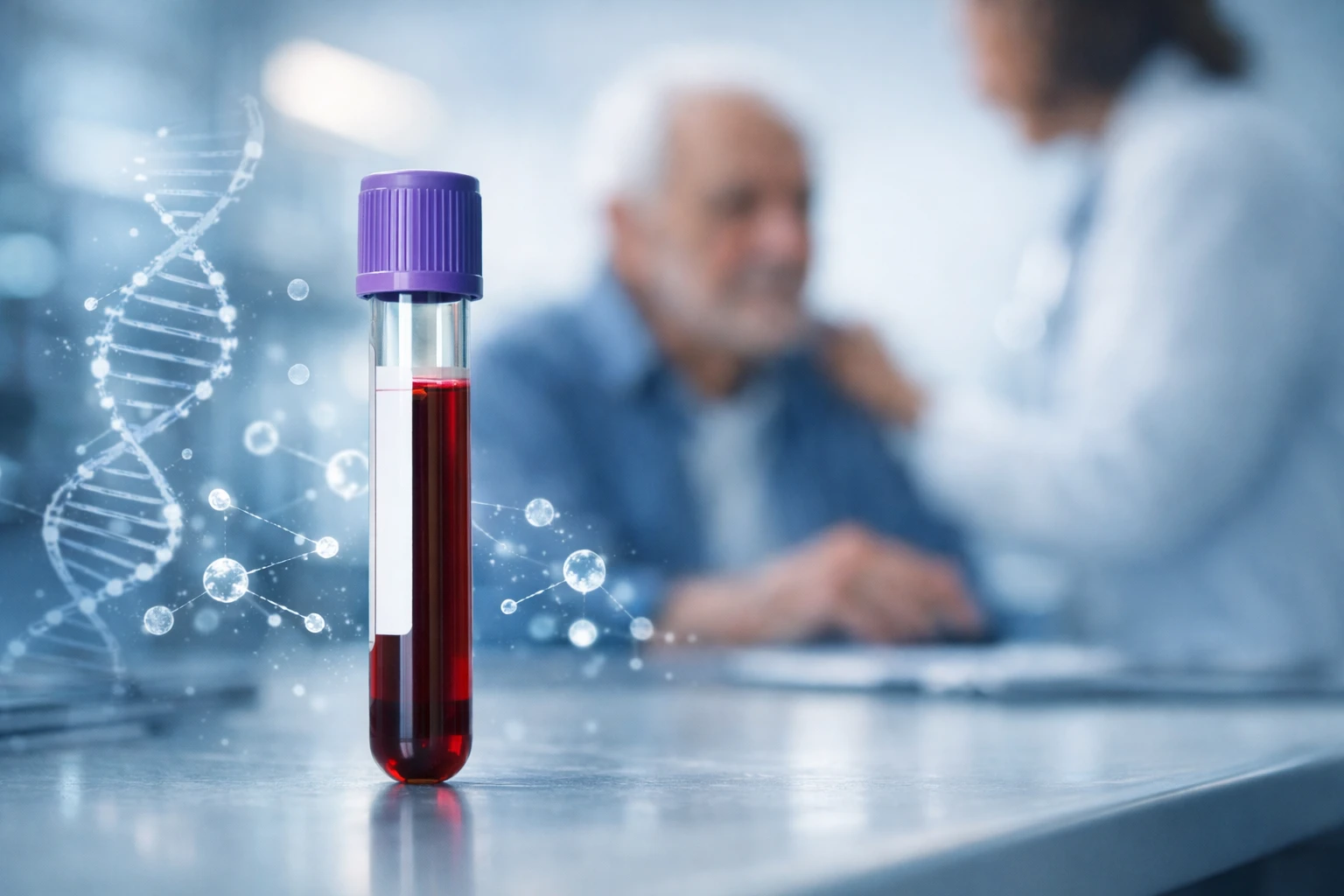
Doctors can use a simple blood test to find out which older people are more likely to live only a few more years. This is because small RNA molecules in the blood seem to accurately predict how long they will live. The discovery, which was published in the journal Aging Cell on February 25, 2026, could change the way doctors figure out how likely it is that older people will die. Instead of looking at cholesterol panels or fitness scores, they could read a molecular signature in the blood that most of modern medicine has missed until now.
Duke Health and the University of Minnesota worked together on new research that shows a simple blood test could help find older adults who are more likely to die within two years. The study shows that small RNA molecules in the blood can help doctors figure out which people over 71 are more or less likely to live only a few more years. This is more accurate than almost any other clinical test that doctors have access to right now.
The discovery comes at a time when scientists are very interested in non-coding RNA molecules. In October 2024, Victor Ambros and Gary Ruvkun won the Nobel Prize in Physiology or Medicine for their discovery of microRNAs, a group of small RNA molecules that control gene expression in all animals. The prize was given for work done in the 1990s on the tiny roundworm C. elegans. At first, this work was thought to be irrelevant to human biology, but it turned out to describe a universal regulatory mechanism that is present in all multicellular organisms, including humans. Now, the Duke study is focusing on a member of the small RNA family that is even more mysterious than microRNAs. This member may be an even better predictor of human aging and survival.
The Molecules That Made the Discovery
The scientists looked at tiny pieces of RNA called PIWI-interacting RNAs, or piRNAs. These are small pieces of DNA, usually 24 to 31 nucleotides long, that stick to a group of proteins known as PIWI proteins. The name comes from the gene "P-element-induced wimpy testis," which was first found in the fruit fly Drosophila melanogaster. For many years, scientists thought that piRNAs only worked in reproductive cells. The best-known job they do is to silence transposable elements, which are mobile DNA segments that can copy themselves and insert themselves into new genomic locations, which can cause harmful mutations.
But new research has made that picture much more complicated. Scientists have now found piRNAs in many tissues besides the germline, such as the brain, liver, and blood that flows through the body. Their roles seem to go beyond just silencing transposons to include controlling growth, tissue regeneration, the immune system, and epigenetic modification. There are more than 30,000 piRNA genes in the human genome, which is a lot more than protein-coding genes. However, their role in the blood has not been well studied.
In the context of aging, piRNAs are especially interesting because they are linked to genomic stability. As organisms get older, transposable elements become more active. They build up in somatic cells and cause the kind of genomic instability that is now known to be a molecular sign of aging. The PIWI-piRNA pathway is the main way to protect against this instability. In organisms such as the freshwater polyp Hydra, which shows little signs of aging and seems to resist the aging process altogether, the PIWI-piRNA pathway stays active in somatic stem cells for the rest of their lives, constantly stopping transposable elements and keeping the genome intact. The implication is profound: organisms maintaining this pathway may possess biological mechanisms to counteract the degeneration characteristic of aging in many species.
The Study: Structure, Cohort, and Methodology
The Duke-Minnesota team looked at blood samples from more than 1,200 older people and found that lower levels of some piRNAs were linked to longer life. But the study's importance goes beyond just that headline finding. It comes from the rigor, scale, and analytical sophistication that went into it.
The blood samples were collected from individuals participating in the Duke Established Populations for Epidemiologic Studies of the Elderly (Duke-EPESE). The National Institute on Aging has been funding this cohort study since 1986. It started with 4,162 adults aged 65 and older who lived in the community in five counties in the north-central Piedmont region of North Carolina. The Duke-EPESE is interesting because it has a wide range of participants. At the start, more than 50% of them were Black, making it one of the most racially diverse groups of older people in the US. The study has collected an amazing amount of information over the years about how older North Carolinians age. This includes things like their social practices, religious behavior, eating habits, exercise patterns, cognitive function, and physical disabilities.
The team used blood samples from 1,271 adults aged 71 and older who lived in the community in the early 1990s for the piRNA study. Survival outcomes were ascertained by correlating participants with national mortality records, thereby providing researchers with an accurate timeline of survival duration post-blood collection.
The team used causal artificial intelligence and machine learning to look at 187 different clinical health measures, such as demographics, lifestyle habits, mood assessments, physical function, standard clinical laboratory tests, NMR-derived lipids and metabolites, and documented medical conditions. They also looked at 828 small non-coding RNAs, which included 687 microRNAs and 141 piRNAs. Utilizing causal AI instead of conventional statistical correlation constitutes a significant methodological differentiation. Virginia Byers Kraus, the lead researcher, said that this analytical method finds factors that are not only related to survival but also likely causes of it.
Kraus, who is a professor in the Departments of Medicine, Pathology, and Orthopedic Surgery at Duke University School of Medicine, said, "The combination of just a few piRNAs was the strongest predictor of two-year survival in older adults, stronger than age, lifestyle habits, or any other health measures we looked at."
Kraus said, "What surprised us most was that this strong signal came from a simple blood test."
Results: Six Molecules That Do Better Than All the Others
The findings indicated that only six specific piRNAs could accurately predict with up to 86 percent precision which seniors would survive for an additional two years. When the researchers tried this six-molecule signature on a second, completely different group of older adults, the results were still accurate. This showed that the signal was picking up on a real biological state and not just a mistake in one dataset.
The predictive model that used small RNAs along with clinical variables and age got cross-validated area-under-the-curve (AUC) scores of 0.92 for two-year survival in the discovery cohort and 0.87 in the external validation group. These scores are much higher than what most biomarker studies get. In direct comparisons, piRNAs surpassed age, cholesterol levels, physical activity, and more than 180 other clinical indicators as predictors of short-term survival.
One of the study's most surprising results was that chronological age was not a very good predictor of two-year survival when molecular markers were added to the models. This contradicts a fundamental assumption in clinical medicine, that a patient's age is the paramount factor in evaluating their short-term prognosis. The data indicate that molecular events within an individual's cells may provide physicians with significantly more information regarding short-term survival risk than the quantity of candles on a birthday cake.
When it came to predicting survival over longer periods of time, like five or ten years, the piRNA signal's predictive power decreased and lifestyle factors like diet and exercise became more important. This implies that piRNAs serve as an exceptionally sensitive indicator of immediate biological condition: a real-time molecular representation of cellular aging, rather than a distant prediction.
MicroRNAs, the type of small RNA that won the 2024 Nobel Prize, did not do better than piRNAs at predicting two-year survival in this group. Although microRNAs are still very important for biological regulation, the Duke study shows that piRNAs may be a better biomarker for short-term mortality risk in older people.
The piRNA Levels Paradox: Less Is More
People who lived longer had consistently lower levels of certain piRNAs in their blood. This is a surprising finding that suggests a biological pathway that is not well understood but could be very important. The research team found nine piRNAs that were linked to two-year survival in their causal models. The effect was always the same: lower circulating levels were linked to longer life.
Kraus said, "We were shocked to learn that less is more." "The longer you lived, the less you had of these."
This pattern is similar to what has been found in laboratory studies of simpler organisms over the years. Researchers have shown that lowering the levels of piRNA in C. elegans, the same tiny roundworm that led to the Nobel Prize-winning discoveries of microRNA, can double the worm's lifespan. In Drosophila melanogaster, the tissue-specific downregulation of piRNA pathway genes in neural or adipose tissue has been demonstrated to prolong lifespan under specific experimental conditions. In Hydra, the PIWI-piRNA pathway functions continuously in somatic cells, and the organism exhibits no significant increase in mortality with age.
The working hypothesis posits that elevated piRNA levels in the bloodstream may indicate underlying physiological dysregulation, suggesting that cells or tissues are involved in maladaptive stress responses, excessive repair processes, or genomic instability. As cells grow, repair, or respond to stress, they release RNA fragments into the bloodstream. This means that circulating piRNA levels may be a good way to measure how much stress the body's cells are under. On the other hand, lower piRNA levels may mean that the body is in a more stable and resilient biological state, where the systems are working with less molecular friction.
The team also found that people who lived longer and had lower piRNA levels were consistently more active throughout their lives, doing things like traveling, doing housework, and exercising regularly. It is still unclear whether physical activity has a direct effect on piRNA levels or if both are the result of a healthier underlying biology.
Among the ten piRNAs linked to two-year survival in the causal models, only two had predicted targets associated with LINE-1 retrotransposons, which are the most prevalent class of transposable elements in the human genome. This indicates that although certain survival-associated piRNAs may function through their traditional role of silencing transposable elements, the majority are probably influencing their effects via alternative or indirect mechanisms, such as the modulation of DNA methylation, histone modification, or other epigenetic pathways. These results support a new model in which piRNAs help people live longer by doing things that go beyond their usual job of protecting the genome.
Are there therapies that can change these molecules in the blood?
The team is now going to look into whether therapies, lifestyle changes, or drugs, including new classes like GLP-1 receptor agonist drugs like semaglutide (Ozempic and Wegovy), can change the levels of piRNA. In recent years, GLP-1 drugs have gotten a lot of attention not only because they work well to treat obesity and type 2 diabetes, but also because there is more and more evidence that they may have wide-ranging anti-inflammatory and possibly anti-aging effects on many organ systems.
The researchers also want to find out if the piRNAs in the blood are the same as the ones in tissues. This will help them understand how the molecules work. They want to know if the piRNAs in the blood are the same as the ones in cells in certain organs and tissues, or if they are a separate biological compartment with its own rules.
The team also plans to broaden their research to include individuals from their 30s to 100 years old throughout North Carolina. This wider age range could show when piRNA signatures start to differ between people who are likely to live longer and those who are likely to live shorter lives. This could make it possible to intervene much earlier.
Kraus said, "These small RNAs are like micro-managers in the body that help control many processes that affect health and aging." "We're just starting to figure out how strong they are." This study indicates that we can detect short-term survival risk through a practical, minimally invasive blood test, aiming to enhance health as we age.
Limitations and the Road to Clinical Application
For all its promise, the study comes with important caveats that the researchers have been careful to acknowledge. The blood samples were drawn from residents of five North Carolina counties, and while the cohort was notably diverse in racial composition, replication in broader and more geographically varied populations will be necessary before any clinical application can be considered.
The predictive strength of the piRNA models was highest for two-year survival and declined substantially at the five- and ten-year marks, limiting the test's usefulness for longer-range forecasting. The piRNA target gene predictions used in the study's pathway analysis are based on computational modeling and should be treated as preliminary, since the molecular interactions between these piRNAs and their predicted gene targets have not yet been confirmed through direct laboratory experiments.
The researchers also note that the scientific tools for identifying and mapping piRNAs are still evolving. The field is young enough that some findings may reflect current limitations in detection and annotation technology rather than definitive biological conclusions. Turning a research signature into a clinically validated diagnostic tool would require demonstrating that the test produces consistent, reproducible piRNA readings from the same sample across different laboratories and different times. Regulators and clinicians would need clear cutoff values — specific thresholds above or below which meaningful clinical decisions can be made — and years of follow-up data before any piRNA test could enter routine care.
There are also ethical considerations. Any tool that ranks survival risk in elderly patients could, if misused, steer medical attention and resources away from people who might still benefit from aggressive treatment. A two-year survival prediction is only as useful as the clinical response it triggers, and safeguards would be needed to ensure such a test is used to improve care rather than to ration it.
A New Chapter in the RNA Revolution
The Duke-Minnesota study comes out at a time when RNA biology may be going through its most important and productive time ever. The 2024 Nobel Prize for microRNAs came after the 2023 Nobel Prize for mRNA vaccine technology, which went to Katalin Karikó and Drew Weissman, and the 2006 Nobel Prize for RNA interference. Three Nobel Prizes in less than twenty years for discoveries related to RNA show that biologists are starting to see life in a new way: the coding regions of the genome, which make proteins, are only a small part of the information that matters. The huge amount of non-coding DNA that was once thought to be "junk DNA" is actually full of regulatory molecules that have a big impact on health, disease, and how long people live.
piRNAs are at the cutting edge of this revolution. There are more of them than microRNAs, we don't know as much about them, and they could be better biomarkers for some parts of human biology. The discovery that certain molecules, obtained from a standard blood draw, can more accurately predict short-term survival in elderly individuals than chronological age itself has significant implications that transcend geriatric medicine. It suggests that the most significant information regarding our aging may already exist within us, encoded in a molecular language that science is just beginning to decipher.
The National Institutes of Health (NIH) gave the study money through several grants, including NIH/NIA R01AG054840. The Duke University Institutional Review Board gave its annual approval for the study. The complete study, entitled "Select Small Non-Coding RNAs Are Determinants of Survival in Older Adults," is published in Aging Cell (Volume 25, 2026, e70403).