The Rich and Complex Cuisine of Homo Sapiens: What Did the Prehistoric Inhabitants of Europe Really Eat?
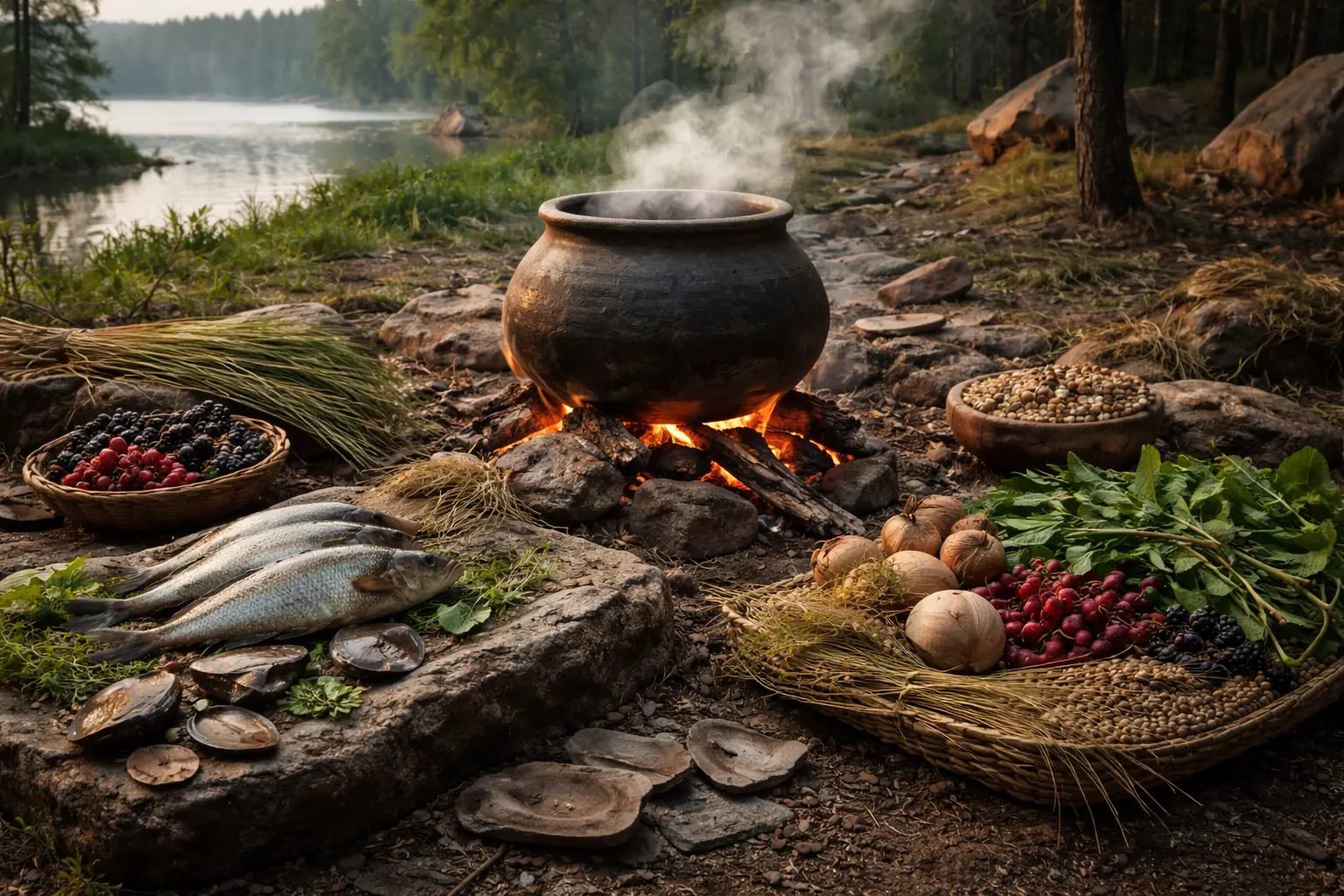
A study of organic remains in ancient pots reveals a startling variety of plants, legumes, fruits, roots, leaves, meat, fish, and other seafood — upending long-held assumptions about primitive diets
For a long time, people have had a rough idea of what prehistoric people ate: cave dwellers tearing into raw pieces of mammoth meat and maybe chewing on a root or berry they found in a bush. It is a vision of subsistence devoid of all refinement—eating solely for survival. A groundbreaking study published on March 4, 2026, in the open-access journal PLOS ONE has shattered that caricature with remarkable force, revealing that the prehistoric inhabitants of Europe had surprisingly complex cuisines, combining a wide array of plant and animal products in what can only be described as deliberate, regionally distinctive recipes.
The study, called "Selective culinary uses of plant foods by Northern and Eastern European hunter-gatherer-fishers," was led by Dr. Lara González Carretero, an archaeobotanist at the University of York in the UK. It included researchers from eight countries: Denmark, Ireland, Germany, Norway, Poland, Russia, and Spain. The European Research Council funded the project as part of the European Union's Horizon 2020 research and innovation program. It is one of the most thorough studies ever done on the eating habits of Europe's Mesolithic and early Neolithic populations. These were groups of hunter-gatherer-fishers who lived between the sixth and third millennia BC, long before farming became common.
A Methodological Breakthrough Beyond Fatty Residues
To comprehend the significance of this study, it is beneficial to recognize the constraints of prior research. For a long time, the standard way to figure out what people ate in the past was to look at lipid residues, which are the fatty molecules that seep into the porous walls of ceramic pots while they are cooking. This method has been useful for finding animal-based foods, especially meat, dairy, and fish, because these foods have a lot of unique fatty acids. But lipid analysis has a big problem: it doesn't find many plant foods. Plants have a lot less oils, waxes, and fats than animal products. The chemicals that plants give off are usually stronger than the ones that fish and meat leave behind.
This bias has had a big effect on how we understand prehistoric diets. Researchers created a distorted picture in which hunter-gatherers seemed to live mostly on meat and fish because lipid analysis kept showing animal products. Plant foods, if they were even recognized, were seen as extra foods instead of the main parts of the diet.
Instead of just using lipid analysis, Dr. González Carretero and her coworkers used a number of different analytical methods to solve this problem. They used both chemical analysis and microscopic examination of charred food crusts, which are the blackened bits that form on the inside of pottery when food is cooked and left to burn. This combined method helped them find tiny bits of plant tissue that had been trapped and preserved in the hardened crusts. Traditional methods would have missed these bits completely.
The team looked at organic remains found in 58 pieces of pottery that were found at 13 archaeological sites in Northern and Eastern Europe. These sites were spread out over a large area, from the Baltic Sea to the river systems of what is now eastern Ukraine. They were built between 6,000 BC and 3,000 BC, when the people who made and used these boats were still living as hunter-gatherer-fishers and getting all of their food from the wild instead of from farms or pets.
A Menu for a Prehistoric Feast
The results were amazing in how rich they were. The researchers found tissue samples from a wide range of plants in the thin, charred layers that were stuck to pieces of pots that were thousands of years old. The inventory doesn't look like the few scraps of food needed to stay alive; it looks more like the list of ingredients for a fancy kitchen: wild grasses like barley and wild oats, brome grass, legumes, fleshy fruits and berries, green leafy vegetables like goosefoot and saltbush, root vegetables, herbaceous stems, and seeds from many different plant families.
These plant remains were often found with animal remains, usually fish and other foods from the water. Chemical tests on the lipid fractions showed that freshwater fish, such as minnows and carp, and shellfish were usually the main source of protein in these dishes. Instead of eating the fish by itself, it was mixed with certain plant ingredients in what seem to be meals that were made on purpose. The plants were not just added at the last minute or by mistake; they were an important part of recipes that had been cooked together in the same pot.
Plants from the Amaranthaceae family, which includes species that are related to modern beets, spinach, and quinoa, were one of the most important discoveries. Archaeobotanists have been arguing for years about what role these plants played in prehistoric diets. Some scholars even wonder if they were actually eaten or just there as environmental contaminants. Finding Amaranthaceae tissues in food crusts, which are clearly linked to cooking, is the first direct proof that these plants were eaten and that they were important to the diets of ancient people.
The Guelder Rose's Secret
One of the most interesting things we found was that guelder rose berries (Viburnum opulus) were found in many places. The guelder rose is a shrub that loses its leaves in the fall and is native to Europe and northern Asia. It produces clusters of bright red, see-through berries. These berries are interesting because they were found in prehistoric cooking pots. When eaten raw, they are mildly toxic because they contain saponin glycosides and a compound called viburnine that is slightly poisonous. They also taste very bad—bitter, acrid, and with a smell that has been compared to old socks in a bad way.
But they kept showing up in the burned remains. In the Baltic region, cooks were putting guelder rose berries with minnows and carp. The fact that a poisonous berry that tastes bad keeps showing up in cooking pots all over the place strongly suggests that these communities had learned how to process it in a way that made it safe to eat, probably by boiling it for a long time or using other forms of heat treatment. People don't act like this when they eat things they find. It shows what people have learned over the years about how to turn a dangerous wild plant into a safe and maybe even valuable food source.
The guelder rose is an important part of European culture and is still important in Eastern European traditions. There is archaeological evidence that people in Ireland, Belgium, and the Baltic region collected it for food during the Mesolithic period. The fact that prehistoric people chose to process these berries in ceramic vessels, even though it was hard and required a lot of knowledge, shows that their cooking traditions were more advanced than we thought.
Regional Recipes: Proof of Cultural Cuisine
The precise combinations of ingredients differed by region, and these discrepancies represent some of the study's most significant findings. The pottery residues did not show a consistent, pan-European way of cooking. Instead, they showed different patterns in different regions, probably because of the natural resources available in each area and the cultural practices of each community.
In the Baltic coastal regions, the favored combination seemed to be freshwater fish accompanied by viburnum berries. Fish was mixed with beans and wild grasses near the eastern border of what is now Ukraine. At other sites, leafy greens and root vegetables made up most of the plants. These patterns indicate that various communities were not merely consuming available resources; they were selecting ingredients and methods of preparation, thereby establishing discernible culinary traditions.
Dimitri Teetaert, an archaeologist at Ghent University in Belgium who did not take part in the study, said that these patterns are important for learning about prehistoric culture. The evidence indicates that hunter-gatherer-fishers upheld particular culinary traditions rather than merely consuming food to satisfy fundamental caloric and nutritional requirements. Their chosen mixtures probably made new flavors and textures that weren't possible before pottery was used. This may have been a big reason why people started using ceramics.
This observation provides an intriguing perspective on the interplay between technology and culinary practices. People in this part of Europe started making pottery between 7,000 and 6,000 years ago. The practice slowly spread from east to west. The new study looks at some of the first pots from this tradition. The different types of ingredients found in them suggest that the invention of ceramic cooking pots did not just make it easier to cook foods that were already available; it also made it possible to make completely new types of dishes that mixed ingredients in ways that were not possible before.
How pottery changed cooking and chemistry in every way
Pottery played a huge role in expanding the diets of people who lived in prehistoric times. People didn't have many ways to cook before ceramic pots. Food could be cooked in pits, wrapped in leaves, dried, smoked, or roasted over open flames. Roasting tends to destroy delicate plant tissues, drying and smoking are mostly used to preserve food, and pit-cooking is hard to control and takes a lot of time.
Pottery changed the game in a big way. A ceramic pot over a fire can boil, simmer, and stew food. These methods change the ingredients in ways that direct heat can't. Boiling makes bones and tough plant fibers easier to digest by taking nutrients out of them. Simmering brings together the flavors of different foods to make something new. Most importantly for the prehistoric cooks of Northern Europe, boiling can get rid of plant toxins that would make raw or roasted foods unsafe to eat.
This principle is perfectly illustrated by the guelder rose. Berries that are raw can upset your stomach or worse. But boiling for a long time breaks down the harmful chemicals, making the fruit safe and possibly releasing helpful nutrients like quercetin, a flavonoid that fights inflammation and has antioxidant properties. Guelder rose berries would have been hard to find without pottery. They became a common part of many communities that were thousands of kilometers apart.
This finding aligns with prior research conducted by the University of York's BioArCh research center, which in 2013 revealed that hunter-gatherers along the Baltic Sea utilized garlic mustard seeds (Alliaria petiolata)—a peppery, wasabi-like spice of minimal nutritional value—to enhance the flavor of their fish and meat dishes as early as 6,100 years ago. That study, which was also published in PLOS ONE, was the first direct proof that spices were used in European cooking. It also showed that prehistoric cooks weren't only worried about calories. They cared about how things tasted. The new 2026 study greatly changes this picture by showing that prehistoric people were much more creative and careful with their plants and cooking pots than the "calories first" model of ancient subsistence would lead you to believe.
A More In-Depth History: Plants in Human Diets Before Pottery
The González Carretero study looks at the Mesolithic and early Neolithic periods, which were about 8,000 to 5,000 years ago. However, the history of plant use in European diets goes back much further. Archaeological finds of grinding stones at Paleolithic sites in Italy, Russia, and the Czech Republic show that people were processing wild plant foods, maybe even grinding them into a kind of flour, as long as 30,000 years ago. Starch grains on these tools show that the plants that were processed included cattails, ferns, and different kinds of grasses. These are foods that are high in energy but need a lot of work to prepare before they can be eaten.
Neanderthals, who lived in Europe about 40,000 years ago, ate plants more often than people thought for a long time. Examining dental calculus, which is hardened plaque that has been preserved on fossil teeth, from Neanderthal specimens throughout Europe has shown a surprisingly wide range of plant life. There were no signs of meat in the Neanderthal dental calculus found in the El Sidrón cave in Spain. It did, however, contain bits of pine nuts, mushrooms, and moss. In contrast, the dental record from Spy Cave in Belgium showed that the person ate a lot of meat, including woolly rhinoceros and wild sheep. These regional differences are very similar to the patterns of dietary variation found in the new pottery study. This suggests that the tendency to develop food traditions that are adapted to the area may have deep evolutionary roots that go back hundreds of thousands of years.
One Neanderthal from El Sidrón had a dental abscess and a gastrointestinal infection. They also had traces of poplar bark, which contains salicylic acid, the active ingredient in aspirin, and the fungus Penicillium, which makes antibiotics. It's still up for debate whether this is an example of intentional self-medication, but it shows that ancient hominins had a more complex relationship with plants than just eating them.
Research published in Vegetation History and Archaeobotany has further substantiated the significance of subterranean plant components, roots and tubers, in Mesolithic European diets. Excavations at Northton, a hunter-gatherer site on the Scottish island of Harris, found a lot of lesser celandine root tubers and bitter-vetch tubers, both of which are high-energy carbohydrate sources. Studies show that the carbohydrate and energy content of some wild European roots and rhizomes is higher than that of cultivated potatoes. This suggests that these foods may have been real dietary staples instead of just supplements.
Reconsidering the "Paleo Diet"
The results of the González Carretero study come out at a time when popular culture is very interested in "paleo" diets. These diets claim to mimic the eating habits of our Stone Age ancestors and usually focus on meat, fish, nuts, and vegetables while leaving out grains, legumes, and dairy. It's hard to miss the irony. The actual archaeological evidence increasingly shows that real prehistoric diets were far more varied, plant-heavy, and regionally specific than any modern dietary program imagines.
The hunter-gatherer-fishers of Northern and Eastern Europe in the Mesolithic period ate wild grasses that are very similar to modern cereals, legumes that paleo dieters would not eat, leafy greens from plant families that are now linked to farmed crops like beets and spinach, and processed berries that needed a lot of knowledge to make safe. They were mixing these foods with fish and shellfish in ceramic cooking pots to make composite dishes like stews, porridges, or other similar dishes that don't look anything like the modern paleo style of grilled steak and salad.
More fundamentally, the evidence indicates that the shift from hunting and gathering to agriculture was not the abrupt dietary revolution commonly depicted. People were already trying out complicated ways to cook, picking and choosing which ingredients to use, and using plants from families that would later be domesticated in their cooking. The adoption of agriculture may have intensified and systematized practices with deep roots in the Mesolithic era.
The Power of Combining Different Methods
The study has an important methodological message for archaeology that goes beyond what it says about food. Traditional lipid residue analysis, though useful, has consistently undervalued the plant aspect of ancient diets. The York-led team was able to find out things about plant foods that decades of research focused on lipids had missed by looking at charred food crusts under a microscope and doing chemical tests on the same material.
This is important not only for academic thoroughness but also for our comprehension of the societies that created these artifacts. If we only use methods that find animal products, we will end up with a picture of prehistoric life where meat and fish are the main foods. This picture may say more about the limits of our tools than about how people really lived back then.
The research team's methodology demonstrated that pottery vessels served purposes beyond mere utility for processing fish oil or storing excess. They were cooking tools used to make mixed dishes from a variety of ingredients. This discovery has an effect on how we understand the social and cultural roles of early ceramic technology. If pots were used to make complicated meals, then the invention and spread of pottery may have been driven not only by the need for storage and preservation, but also by the desire to make new foods, new flavors, and new ways of cooking.
Looking Ahead
The study presents various opportunities for subsequent inquiry. The researchers have shown that charred food crusts on pottery are a very underused source of dietary information. They have also shown that the combined analytical approach can get a lot more data than was possible before. Using these techniques on pottery from other places and times could greatly improve our understanding of how ancient diets changed over time in Europe and beyond.
There are also interesting questions about the social aspects of food from prehistoric times. Did some recipes have cultural meaning, maybe because they were used for seasonal celebrations, community events, or religious ceremonies? Were there expert cooks in communities who knew how to process plants, especially how to detoxify foods like guelder rose? Did the sharing of cooking knowledge help Mesolithic communities trade and talk to each other over long distances?
These questions are still just guesses for now, but the work of Dr. González Carretero and her team has changed the way we think about them. We now know that the people who lived in Europe a long time ago didn't just take what the land gave them. They were active, knowledgeable, and creative cooks who chose certain ingredients, mixed them according to local customs, and used ceramic technology to turn raw materials into composite dishes. They had a full-fledged cuisine, and it was much more varied than anyone had thought.